Gignouxphotos

Directions Website Contact the business

Gignouxphotos Award winning photojournalist specialising in documentary photography, visual storytelling and multi Born in the United States, Alan lives and works in London.

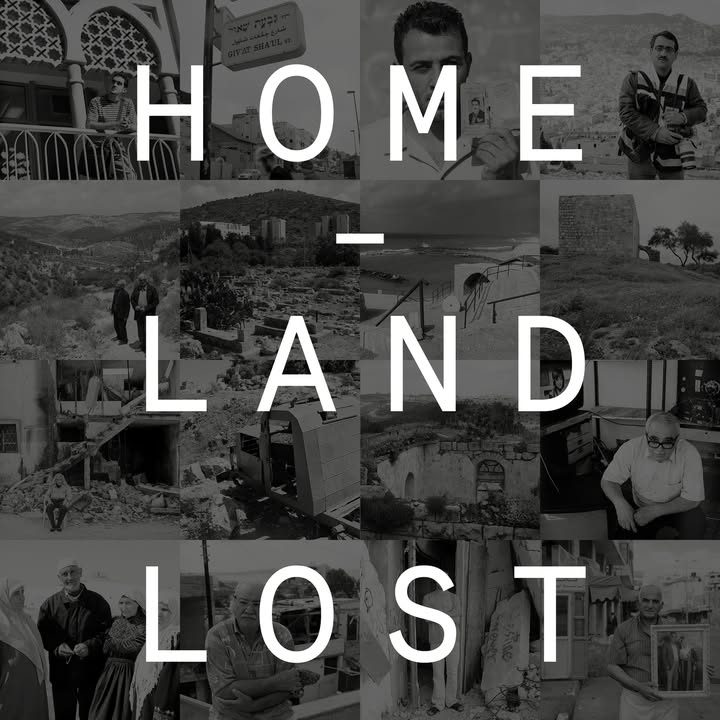
Gignouxphotos is an established photojournalistic and multimedia company, whose projects focus on the socio-political and environmental aspects of controversial issues around the world. Working with Non-Governmental Organisations such as CARE, Oxfam and the British Council, projects have all achieved international success. The exhibition Homeland Lost was exhibited across the Middle East, including the Cinematic in Tel Aviv, one of the few times that the Palestinian refugee issue has been exhibited in Israel, as well as being showcased in the Palestinian Film Festival at the Barbican in London. Alan Gignoux has been working as a professional documentary photographer since 2000 and prior to that as a documentary researcher and journalist. Demonstrating a commitment to recording the effects of occupation and displacement on individual communities in different parts of the world, including the Middle East, North Africa and Canada, through long-term photographic projects. Best known body of work, Homeland Lost, is a series of photo essays looking at long-term refugee situations throughout the world. The first in the series looks at the Palestinian situation and has been exhibited extensively in the Middle East and Europe, including the Barbican, London and the Tropenmuseum, Amsterdam as part of the group exhibition “Palestine 1948: Remembering a Past Homeland.”

Recently, concentrating on multimedia projects investigating environmental questions, such as the devastation of the Appalachian landscape following a shift to mountaintop removal mining and the damage to the water system, agriculture and human health caused by the booming tar sands mining industry in Alberta, Canada. In addition, Alan has made a number of photographic series ranging from short human interest stories to fine art landscapes.
SUPPORT OUR KICKSTARTER -  Help us make HOMELAND LOST PHOTOBOOKhttps://www.kickstarter.com/projects/homelandlost/homelan...
11/11/2026

SUPPORT OUR KICKSTARTER - Help us make HOMELAND LOST PHOTOBOOK
https://www.kickstarter.com/projects/homelandlost/homeland-lost?ref=nav_search&result=project&term=gignouxphotos&total_hits=1
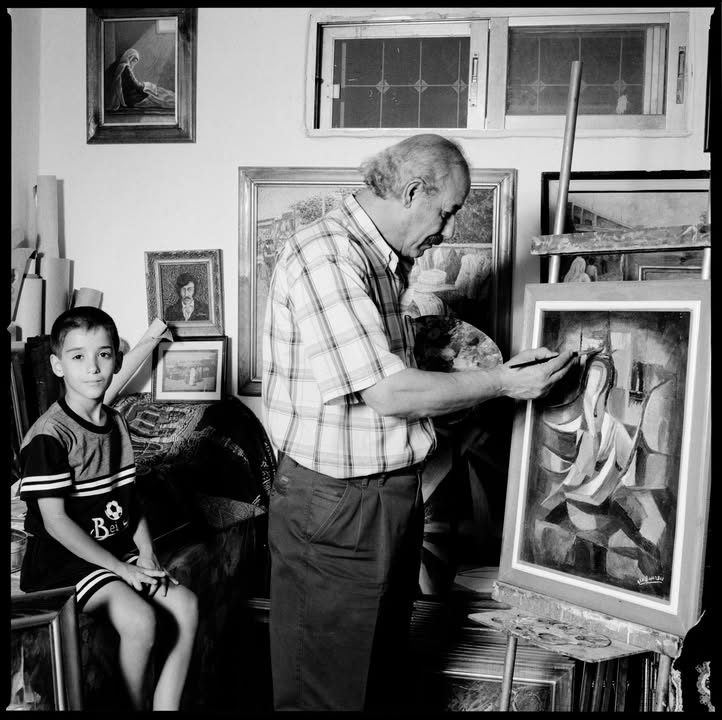
1) Rizq Abd al-Hadi Abu Hmeiid
Photographed in Wihdat Camp, Jordan
Village of origin: al-‘Abbaysiyya, Jaffa District

Rizq Abd al-Hadi Abu Hmeiid was an artist and a teacher at the UNRWA school at the time his portrait was taken.

2) Al-‘Abbasiyya, Jaffa District
Present-day Yehud, Magshimim, Ganne Yehuda, Ganne Tiqwq, Savyon

Located east of Jaffa, al-‘Abbasiyya was a large agricultural village with approximately 3,000 inhabitants before 1948. Residents cultivated citrus fruits, bananas, and cereals, and produced handwoven papyrus mats. A weekly Saturday market brought together traders selling agricultural produce, livestock, and textiles from across the surrounding region.

During fighting in the spring and summer of 1948, many residents fled or were displaced from the village. Women and children were reportedly encouraged to evacuate ahead of the fighting, and Irgun forces occupied al-‘Abbasiyya in May 1948. The village subsequently changed hands several times before coming under Israeli control in July.

The destruction of much of the village appears to have taken place later in 1948. In September, David Ben-Gurion requested cabinet approval for the demolition of al-‘Abbasiyya, shortly before plans were advanced to settle Jewish immigrants in the area.

The village mosque and a shrine still survive. Several Palestinian houses remain and are now incorporated into the Israeli town of Yehud.

SUPPORT OUR KICKSTARTER - Help us make HOMELAND LOST PHOTOBOOK https://www.kickstarter.com/projects/homelandlost/homelan...
10/11/2026

SUPPORT OUR KICKSTARTER - Help us make HOMELAND LOST PHOTOBOOK
https://www.kickstarter.com/projects/homelandlost/homeland-lost?ref=nav_search&result=project&term=gignouxphotos&total_hits=1

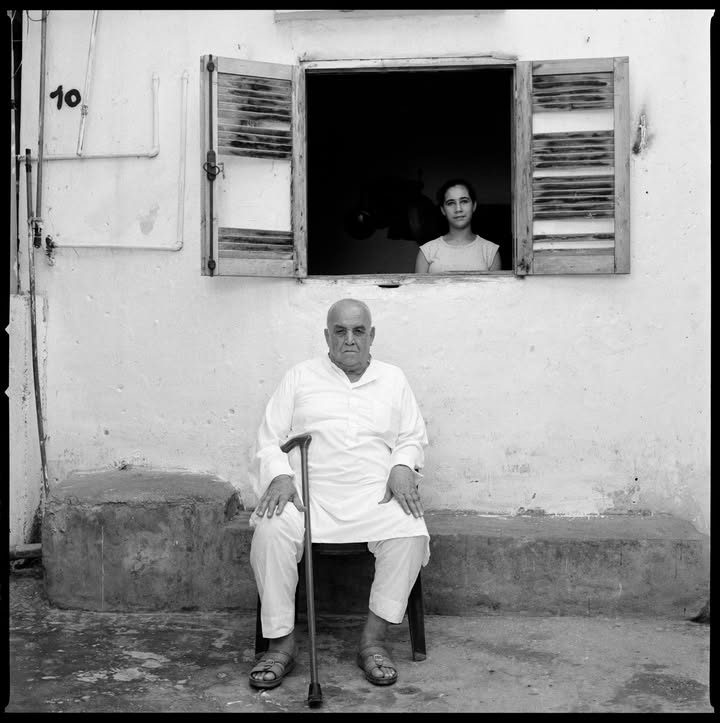
1) Abu Zogy Iskandar and his granddaughter
Photographed in Burj Barajneh Camp, Lebanon�. Village of origin: Kuwaykat, Acre District.

Abu Zogy Iskandar died in 2009. In our communications over email with Ahmad Iskandar in 2026, he reminisced about how his grandfather used to speak to him about his homeland:

“On May 15, 1948, the world changed within hours and minutes — that is how my grandfather always described it.

My grandfather was forced to leave his land, his home, and his memories behind in kw, yet he never abandoned the dream of return.

He passed away leaving behind nearly two hundred grandchildren, and each one of us carries the trust and legacy he placed in our hearts — the legacy of the land, the memory, and the right to return.

We grew up carrying the same dream he lived with until his final days.

And his most important wish to us was this:

If the day of return ever comes, carry what remains of my bones and bury me in Kwaykat.”

2) Kuwaykat, Acre District
Present-day Beit HaEmek

SUPPORT OUR KICKSTARTER -   Help us make HOMELAND LOST PHOTOBOOK  https://www.kickstarter.com/projects/homelandlost/home...
06/11/2026

SUPPORT OUR KICKSTARTER - Help us make HOMELAND LOST PHOTOBOOK
https://www.kickstarter.com/projects/homelandlost/homeland-lost?ref=nav_search&result=project&term=gignouxphotos&total_hits=1
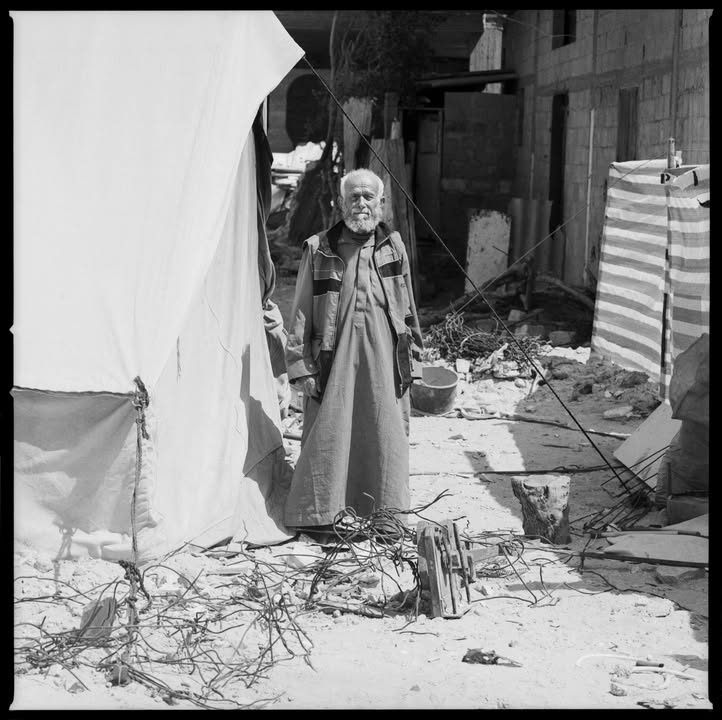
1) Sulayman Joma’a Alqadhy
Photographed in Rafah Camp, Gaza Strip
Originally from Beersheba District

Sulayman Joma’a Alqadhy was in 1920 in Beersheba District to a Bedouin family that roamed the Negev.

At the time of being photographed, he was living in a UNRWA tent because his house in Rafah Camp had been bulldozed.

2) Gvulot, Beersheba District
Present-day Kibbutz Gvulot

The photograph shows lands formerly used by Bedouin communities, now cultivated by Kibbutz Gvulot, established in 1945.

Before 1948, tens of thousands of Bedouin lived across the Naqab/Negev, sustaining tribal and semi-nomadic communities through grazing, seasonal agriculture, and village settlement. During and after the 1948 war, most were displaced or expelled towards Gaza, Sinai, Jordan, and the West Bank. Only a small minority remained inside Israel.

In the 1950s, many Bedouin who remained were relocated into a restricted military-controlled area in the northeastern Negev known as the Siyag (Enclosed Zone) where they were encouraged to live in state-sponsored purpose-built villages. Large areas of Bedouin land were subsequently expropriated for state and agricultural use.

Some Bedouin have rejected the state villages and continue to live in historical Bedouin villages or new settlements of their own creation. These communities are officially unrecognised by the state and are subject to ongoing disputes over land, planning, and demolition orders. Many of these unrecognised villages have been demolished and rebuilt several times.

SUPPORT OUR KICKSTARTER AND HELP US MAKE 'HOMELAND LOST' PHOTOBOOK  https://www.kickstarter.com/projects/homelandlost/ho...
03/11/2026

SUPPORT OUR KICKSTARTER AND HELP US MAKE 'HOMELAND LOST' PHOTOBOOK https://www.kickstarter.com/projects/homelandlost/homeland-lost?ref=nav_search&result=project&term=gignouxphotos&total_hits=1

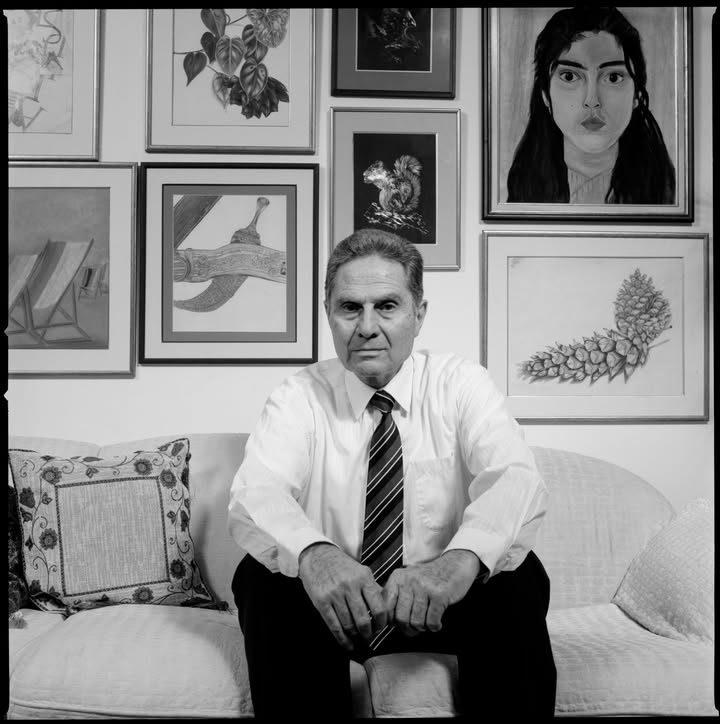
1) Bassem al-Ghassen photographed in Beirut�
Place of origin: German Colony, Jerusalem

Bassem al-Ghassen’s family left Jerusalem in 1948 after receiving warnings of impending violence, moving first to Damascus and later to Cairo.

Supported by a scholarship from an American benefactor, al-Ghassen graduated in chemical engineering from the Drexel Institute of Technology in 1957. He subsequently worked in the oil industry across several countries, including Algeria and Libya.

In 1986, while the family was living in Tripoli, Libya, their home was struck during the United States air raids on the city. His eighteen-year-old daughter, Rafaat — an art student — was killed in the attack. Her paintings hang behind him in the photograph.

Al-Ghassen is married to Saniya and has one surviving daughter, Kinda.

2) German Colony, Jerusalem
Present-day HaMoshava HaGermanit

Before 1948, many affluent Palestinian families lived in the German Colony alongside Jewish and European residents. As violence escalated in Jerusalem during the final months of the British Mandate, many Arab inhabitants left temporarily, fearing for the safety of their families and expecting to return once conditions stabilised.

Following the establishment of Israel and the transfer of control over West Jerusalem to Israeli authorities, the remaining non-Jewish residents were compelled to leave their homes. From September 1948 onwards, Palestinian-owned properties were allocated to Jewish residents.

The photograph shows the site of Bassem al-Ghassen’s family house, now replaced with a school.

03/11/2026

Thank you everyone who has supported so far ❤️Raising funds to print the ‘Homeland Lost’ book based on photographs from the project of the same name by Alan Gignoux. Help us make this happen 🕊️link to pledge for the photobook in bio.

Alan Gignoux’s Homeland Lost photography project (2003-5) pairs portraits of Palestinians displaced because of the 1948

Nakba with images of the homes and villages they were forced to leave or fled in fear for their lives.
With your support we will make a photobook drawn from the Homeland Lost archive, which we aim to publish in 2027.

The FRONT COVER PHOTOGRAPH will be a portrait of Zeinab al-Saqqa photographed by Alan in Burj Barajneh Refugee Camp in Lebanon in 2004. She was forced to leave her home village of al-Nahr in Acre District during the 1948 Nakba and fled to Lebanon.

When Alan initially met her, she asked to be photographed in her wedding dress, one of the few things she had brought with her from Palestine. He returned the next day, and it is one of the photographs from that meeting that we have chosen for the front cover of the photobook.

We reconnected with Zeinab’s family via Ahmed Iskander, Alan’s fixer in Burj Barajneh Camp. Zeinab’s eldest son was happy for her portrait to be featured on the cover in support of the Palestinian cause.

The back cover shows what remained of Zeinab’s village, Al-Nahr, when Alan photographed it in 2005. The title is featured in English onthe front cover and Arabic on the back.


christensson


sumpton


SUPPORT OUR KICKSTARTER AND HELP US MAKE 'HOMELAND LOST' PHOTOBOOK https://www.kickstarter.com/projects/homelandlost/hom...
03/11/2026

SUPPORT OUR KICKSTARTER AND HELP US MAKE 'HOMELAND LOST' PHOTOBOOK https://www.kickstarter.com/projects/homelandlost/homeland-lost?ref=nav_search&result=project&term=gignouxphotos&total_hits=1

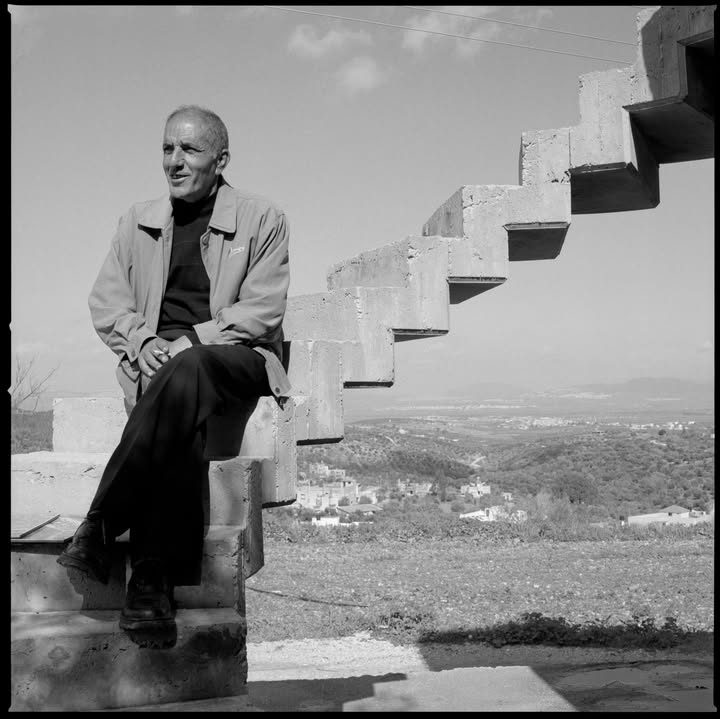
1) Muktar Mohamed Jibreen photographed in Taybeh, West Bank�
Village of origin: al-Lajjun, Jenin District

2) Al-Lajjun, Jenin District
Present-day Megiddo

Before 1948, al-Lajjun was a village northwest of Jenin with just over 1,000 inhabitants with a small marketplace, six grain mills, and a health centre. Residents cultivated grain, vegetables, and citrus fruits on the surrounding lands.

The village became involved in fighting in April 1948 during battles around the nearby settlement of Mishmar HaEmek. Historical accounts indicate that al-Lajjun was occupied by Haganah forces on 17 April, after which parts of the village were demolished.

Many inhabitants fled or were expelled to the nearby Palestinian town of Umm al-Fahm, where they became internally displaced within Israel as so-called “present absentees,” Palestinians who remained inside the state but were prevented from returning to their homes and lands.

Kibbutz Megiddo was established on village lands in 1949. Today the mosque, a mill, the health centre, several partially destroyed houses, and the village cemetery still survive.

Address

Copeland Park And Bussey Building
London
SE15 3SN

Alerts

Be the first to know and let us send you an email when Gignouxphotos posts news and promotions. Your email address will not be used for any other purpose, and you can unsubscribe at any time.

Contact The Business

Send a message to Gignouxphotos:

Shortcuts

Share

Category